Not every saltwater fish is a good beginner fish — some are hardy and forgiving, while others need more room, specialized care, or a mature established reef before they are likely to do well. Here are the types Caesar's original guide points first-time reef keepers toward.
Clownfish
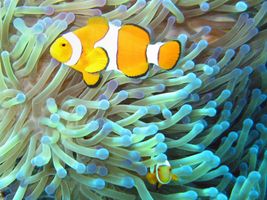
Hardy, colorful, and widely available captive-bred, clownfish are one of the most familiar starting points for a first marine aquarium. A compatible pair can work well in an appropriately sized setup, and they do not require an anemone to thrive.
For tank size, pairing, feeding, and temperament details, see our Clown Fish care guide.
Chromis
Green and blue chromis are active, colorful members of the damselfish family. They can add movement to the upper areas of a reef tank and are often considered approachable marine fish for hobbyists who are ready to begin stocking.
Even peaceful-looking fish can develop social or territorial issues as they mature, so choose the number of fish and tank size carefully and watch the group as it settles in.
Clean-Up Gobies
Sand-sifting gobies such as diamond watchman gobies are fascinating bottom-oriented fish that spend much of their time working through the substrate in search of food. Their constant activity can help keep the upper layer of the sandbed moving.
That does not make them maintenance-free cleaners: they still need an aquarium with appropriate habitat and enough suitable food to support them.
What to Wait On
Tangs, larger angelfish, and many wrasses generally deserve more planning than a brand-new reef can offer. Adult size, swimming room, feeding needs, temperament, and tank maturity can all become important considerations.
Rather than buying a fish because it is small in the store, plan around its adult size and long-term needs. Some of the most impressive reef fish are much better choices after you have gained experience and built a larger, established system.
A Couple of Fun Facts
- Adding fish slowly gives the aquarium's biological filtration time to adjust to an increasing bioload. New marine tanks are easier to manage when stocking is deliberate rather than rushed.
- Captive-bred marine fish can be an especially attractive option for newer hobbyists because they are already accustomed to aquarium conditions and prepared foods.
Build the stocking plan before buying the fishBring your tank size, how long it has been running, current livestock, filtration, and the fish you eventually hope to keep when you visit Caesar's. The team can help you build a stocking order instead of choosing one fish at a time without a long-term plan.
← Back to the Care Library