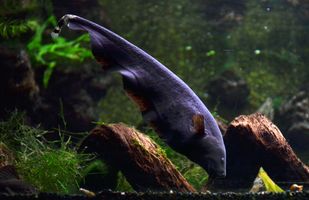
The Pinktail Chalceus (Chalceus macrolepidotus) is a large, fast-swimming silver fish native to South American river systems. It spends much of its time near the surface, needs open swimming space, and is well known for jumping when startled.
Tank Size & Setup
Caesar's original guide recommends at least 75 gallons for a single Pink Tail Chalceus, with 100+ gallons if you are keeping several. Because this fish is active and surface-oriented, aquarium footprint and open swimming length matter just as much as total gallonage.
Keep the upper part of the aquarium relatively open, with décor and hiding structure concentrated toward the edges and lower levels. This gives the fish room to accelerate without constantly navigating around tall obstacles.
The Lid Is Not Optional
This is the most important husbandry point in the original Caesar's guide. Pink Tail Chalceus are fast, skittish fish and can launch themselves out of the aquarium when startled.
Use a tight-fitting, secure lid with no large openings around filters, cables, or plumbing. FishBase also notes that the species occurs mainly near the surface and at times jumps from the water, reinforcing why the cover needs to be treated as essential.
Water & Filtration
The species naturally occurs in tropical South American freshwater and is associated with well-oxygenated water. Strong filtration and good gas exchange are useful for an active fish of this size.
The Caesar's prototype uses a pH range of 6.5–7.5. Aim for stability rather than chasing a perfect number, and maintain water quality with appropriately sized filtration and regular maintenance.
Diet
Pink Tail Chalceus are predatory feeders with a preference for protein-rich foods. FishBase records worms, insect larvae, and small fish among the natural diet.
In the aquarium, use a varied diet built around quality pellets and frozen or live foods such as insects, worms, shrimp, and other appropriately sized meaty foods. Avoid relying on a single food type.
Temperament & Tank Mates
These fish are active and can be nervous, especially when kept in an exposed aquarium or startled by sudden movement. The original Caesar's guide recommends groups of six or more when keeping them socially, with a larger aquarium to match.
Choose large, robust tank mates that are unlikely to become prey and that can tolerate an energetic upper-water fish. Avoid very small community fish, and provide enough swimming room that tank mates are not constantly competing for the same space.
Secure the lid before the fish comes home
Bring your tank dimensions, lid setup, filtration, current livestock, and a photo of the aquarium when you visit Caesar's. The team can help you assess swimming space, compatibility, and whether there are any escape gaps that need to be fixed first.
← Back to the Care Library