Corydoras catfish are among the most useful-looking fish in a community aquarium because they spend so much time exploring the bottom. That behavior has earned them a reputation as a “cleanup crew,” but the label can be misleading. Corys will pick up edible food that reaches the substrate, yet they still need a complete diet, clean water, and routine tank maintenance just like every other fish.
The Cleanup Crew Myth
Corydoras do not live on fish waste, algae, or whatever happens to be left behind after the other fish eat. They are active foragers that search the substrate for edible foods, including small invertebrates and other organic material.
Think of them as bottom-feeding community fish, not aquarium janitors. Uneaten food should still be removed when necessary, gravel or sand should still be maintained, and water changes should remain part of the normal routine.
Keep Corys in a Group
Corydoras are social fish. A lone cory may survive, but groups are far more likely to show the active, relaxed behavior hobbyists enjoy. For common medium-sized species such as bronze corys, a group of at least six is a good starting point.
When choosing a tank, plan for the entire group rather than one fish. A 20-gallon aquarium is a practical starting point for many of the commonly sold medium-sized species, although pygmy species can have different space requirements and larger species may need more room.
Choose a Cory-Friendly Substrate
Corys spend much of their time nosing through the bottom with sensitive barbels around the mouth. Fine sand or smooth, rounded gravel allows them to forage naturally without repeatedly rubbing against sharp edges.
Keep the substrate clean and avoid rough décor with narrow traps or abrasive surfaces. Damaged barbels are often associated with poor substrate conditions and declining water quality, so a clean bottom matters as much as the material itself.
Feed Them on Purpose
Do not assume food that falls past the tetras or rasboras will be enough. Offer a quality sinking pellet, wafer, or other complete bottom-feeder food, with frozen or live foods such as bloodworms, daphnia, or brine shrimp used as appropriate variety.
Feed where the corys can reach the food before faster tank mates take everything. In a busy community tank, watching them eat is the easiest way to confirm the whole group is actually getting fed.
Water, Filtration & Tank Setup
Stable, clean water is more important than chasing one exact number. Many popular Corydoras species do well in broadly neutral freshwater conditions, but temperature and hardness preferences vary by species. Always check the requirements for the exact cory you are buying.
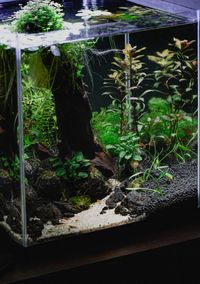
Provide good biological filtration, regular partial water changes, open areas for foraging, and shaded or planted places where the group can rest. Moderate flow is usually fine as long as the bottom of the aquarium still has calmer areas.
Why Do Corydoras Swim to the Surface?
An occasional quick dash to the surface followed by an immediate return to the bottom can be completely normal. Corydoras can supplement their breathing by gulping atmospheric air and absorbing oxygen through the intestine.
Constant surface breathing, however, deserves attention. If the whole tank is gasping or the behavior suddenly becomes excessive, check temperature, oxygenation, ammonia, nitrite, and overall water quality.
Good Tank Mates
Corydoras are generally peaceful and fit well with similarly peaceful community fish such as small tetras, rasboras, livebearers, and other non-aggressive species. Avoid tank mates that repeatedly harass them, compete too aggressively for food, or are large enough to view them as prey.
Remember that “Corydoras” covers many different species. Bronze, panda, peppered, sterbai, pygmy, and other corys do not all have identical adult sizes or temperature preferences, so compatibility should be checked species by species.
Planning a Corydoras group?
Bring your tank size, current stocking list, and water temperature when you visit Caesar's. The team can help you choose an appropriate cory species, group size, substrate, and sinking food for your aquarium.
← Back to the Care Library