🐟 Your Next Aquarium Upgrade Starts Here — Shop In-Stock Supplies Online + Discover Fish, Coral, Plants & Pond Favorites In Store

Home  /  Blog Posts  /  Saltwater Fish
Saltwater Fish · Care & Species Guide

Ocellaris Clownfish: The Common Anemonefish

Vibrant, hardy, and famous for their fascinating mutualistic relationship with sea anemones, these beginner-friendly marine fish are a staple for saltwater aquariums of all sizes.

The Ocellaris Clownfish (Amphiprion ocellaris), widely known as the common clownfish or false percula, is arguably the most iconic marine fish in the aquarium hobby. Native to the warm, tropical waters of the Indo-Pacific and Red Sea, their playful waddle and striking coloration make them a highly popular choice for both novice and experienced aquarists.

Appearance & Size

Famous for "The Nemo Factor," Ocellaris Clownfish feature a bright orange, reddish-brown, or occasionally black body. This vibrant base is crossed by three distinct white bands that are outlined in thin black lines.

As adults, they grow to an average of 3 to 4.5 inches (7.6 to 11 cm) in length. Interestingly, females will grow noticeably larger than their male counterparts. While wild clownfish live between 6 to 10 years, they regularly exceed 10 to 20 years in home aquariums with proper care.

The Anemone Partnership

In the wild, clownfish and sea anemones share a classic, mutualistic symbiotic relationship. The anemone's stinging tentacles provide the clownfish with a safe home and unparalleled protection from predators. In return, the clownfish chases away anemone-eating fish, cleans its host, and provides vital nutrients through waste.

How do they survive the sting? Clownfish are completely immune to the anemone's venom thanks to a specialized, protective layer of mucus on their skin.

Fascinating Biology: Sex Reversal

One of the most fascinating aspects of clownfish biology is their gender fluidity. All clownfish are born male. They live in strict social hierarchies, and the largest, most dominant fish in a pair or group transitions to become the sole breeding female. If that female dies, the most dominant male will change sex to become the new breeding female—a process that cannot be reversed.

Aquarium Care & Habitat

Clownfish are incredibly hardy and beginner-friendly. Because most available in the pet trade today are captive-bred, they are remarkably well-adapted to aquarium life. They do not require massive tanks; in fact, setups utilizing as little as 10 gallons can comfortably house a pair.

Maintain your saltwater parameters carefully: keep temperatures between 72–78°F (though they can tolerate up to 80°F in some setups), pH between 7.5 and 8.5, and salinity/specific gravity at a steady 1.020–1.025.

Diet & Behavior

Ocellaris Clownfish are omnivorous and readily accept a variety of foods, including high-quality marine flakes, pellets, and frozen meaty foods like mysis shrimp.

Generally peaceful, they can become highly territorial over their designated space. Despite their playful appearance, they will aggressively defend the area around their host anemone or favorite corner of the tank from intruders.

Do I need an anemone?

A host sea anemone is fascinating to watch, but it is not required for a clownfish to thrive in captivity. In fact, anemones often require more intense lighting and pristine water conditions than the clownfish itself! If an anemone is not present, clownfish will happily host artificial structures, powerheads, or various soft and LPS corals.

← Back to Blog Posts
Keep Learning

Explore More Blog Posts

Research the species before you stock the tank, then stop by Caesar's Tropical Fish in Santa Rosa for current availability and setup-specific advice.
Browse Blog Posts

More Posts

Sea Anemones: Anatomy, Diet & Symbiosis | Caesar's Tropical FishSea Anemones: Anatomy, Diet & Symbiosis | Caesar's Tropical Fish
Sea Anemones: Anatomy, Diet & Symbiosis | Caesar's Tropical Fish

Discover the fascinating world of sea anemones. Learn about their anatomy, predatory stinging tentacles, and famous symbiotic relationships with clownfish and algae.

Silver Prochilodus (Flagtail Characin): Care Guide | Caesar's Tropical FishSilver Prochilodus (Flagtail Characin): Care Guide | Caesar's Tropical Fish
Silver Prochilodus (Flagtail Characin): Care Guide | Caesar's Tropical Fish

Learn how to care for the Silver Prochilodus, also known as the Flagtail Characin. Discover tank size, feeding habits, and why this striking Amazonian fish is the ultimate algae grazer for large aquariums.

Roseline Shark (Denison Barb): Species & Care Guide | Caesar's Tropical FishRoseline Shark (Denison Barb): Species & Care Guide | Caesar's Tropical Fish
Roseline Shark (Denison Barb): Species & Care Guide | Caesar's Tropical Fish

Learn how to care for the Roseline Shark (Denison Barb). Explore tank size, water flow requirements, and tank mate compatibility for this active, peaceful freshwater schooling fish.

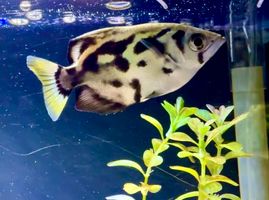
Burmese Archerfish: Species & Care Guide | Caesar's Tropical FishBurmese Archerfish: Species & Care Guide | Caesar's Tropical Fish
Burmese Archerfish: Species & Care Guide | Caesar's Tropical Fish

Learn how to care for the Burmese Archerfish (Toxotes blythii), a striking freshwater species famous for spitting water jets to hunt insects. Discover tank setup, feeding, and compatibility tips.

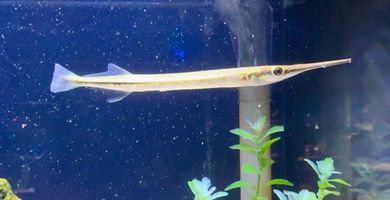
Needlenose Gar (Longnose Gar): Species Guide | Caesar's Tropical FishNeedlenose Gar (Longnose Gar): Species Guide | Caesar's Tropical Fish
Needlenose Gar (Longnose Gar): Species Guide | Caesar's Tropical Fish

Discover the fascinating Needlenose Gar (Longnose Gar), an ancient, prehistoric predator known for its armored scales, needle-like snout, and unique ambush hunting behavior.

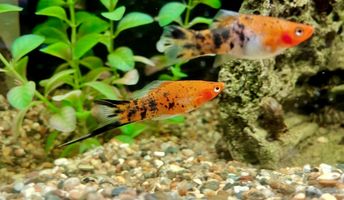
Swordtails: The Classic Community Livebearer | Caesar's Tropical FishSwordtails: The Classic Community Livebearer | Caesar's Tropical Fish
Swordtails: The Classic Community Livebearer | Caesar's Tropical Fish

Learn how to care for Swordtails (Xiphophorus hellerii), a popular freshwater livebearer known for the male's distinct "sword" tail. Discover tank setup, feeding, and breeding tips for your home aquarium.

Beneficial Bacteria: How Nite-Out II Protects Your TankBeneficial Bacteria: How Nite-Out II Protects Your Tank
Beneficial Bacteria: How Nite-Out II Protects Your Tank

MICROBE-LIFT/Nite-Out II is specially formulated to rapidly reduce ammonia and nitrite levels in aquarium water, including tanks that contain marine life. It works by decreasing ammonia and nitrite toxicity, helping establish a healthier environment for the fish, invertebrates, and coral living in your system.

Oscar Fish: The Amazon's Most Intelligent "Wet Pet"Oscar Fish: The Amazon's Most Intelligent "Wet Pet"
Oscar Fish: The Amazon's Most Intelligent "Wet Pet"

The Oscar (Astronotus ocellatus) is a large, highly intelligent freshwater fish from the cichlid family, native to the Amazon River basin in South America. Few community fish develop the kind of personality an Oscar does — which is exactly why they've earned a reputation as one of the closest things to a "wet pet" in the hobby.