Ocellaris Clownfish (False Percula): Species & Care Guide | Caesar's Tropical Fish
Learn how to care for the Ocellaris Clownfish. Discover saltwater tank requirements, diet, and fascinating facts about anemone symbiosis and sex reversal.
Colorful, predatory, and fascinating, these marine invertebrates are famous for their stinging tentacles and the iconic symbiotic relationships they form with clownfish on the reef.
Sea anemones are marine invertebrate animals closely related to corals and jellyfish. Named for their striking resemblance to terrestrial flowers, they are anything but delicate plants—they are highly efficient ambush predators found in oceans across the globe.
Anemones are essentially polyps featuring a cylindrical body (or stalk) topped by a central mouth surrounded by a ring of waving, hollow tentacles. Depending on the species, they can be as tiny as 0.5 inches across or grow to an incredible 6 feet in diameter.
Despite being complex predators capable of capturing nimble prey, sea anemones lack a brain or a skeleton. Instead, they rely on a decentralized nervous system to process touch, light, and chemical signals in their environment. While they attach themselves to rocks, shells, or the ocean floor using a sticky adhesive basal disc (or foot), they are not completely immobile. If conditions turn poor, they are capable of slowly creeping or "swimming" to new locations.
Sea anemones are strict carnivores that feed on zooplankton, small fish, shrimp, and crabs. They operate as ambush predators, waiting patiently for a meal to wander too close.
Their waving tentacles are armed with specialized, microscopic stinging cells called nematocysts (or cnidocytes). When triggered by the brush of a passing animal, these cells shoot microscopic, harpoon-like structures that inject paralyzing venom into the prey. Once the prey is immobilized, the anemone pulls the meal directly into its central mouth.
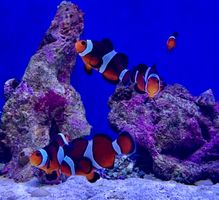
One of the main reasons anemones are so beloved in the aquarium hobby is their incredible ability to form symbiotic relationships:
Found everywhere from shallow tide pools and tropical coral reefs to cold polar waters and the deep sea, anemones are highly adaptable. Some species anchor to rocks or wood pilings, while others prefer to burrow deeply into sand or mud. They are incredibly prolific, capable of reproducing sexually (by releasing eggs and sperm into the water column) and asexually (by splitting completely in half or breaking off pieces of their foot to form new, identical clones).
While beautiful, keeping sea anemones in a home aquarium requires specialized care. Because they rely on photosynthetic algae and demand pristine water quality, they require mature tanks with intense reef lighting. They are also prone to wandering, which makes covering your powerheads absolutely critical to prevent them from being injured.
Research the species before you stock the tank, then stop by Caesar's Tropical Fish in Santa Rosa for current availability and setup-specific advice.